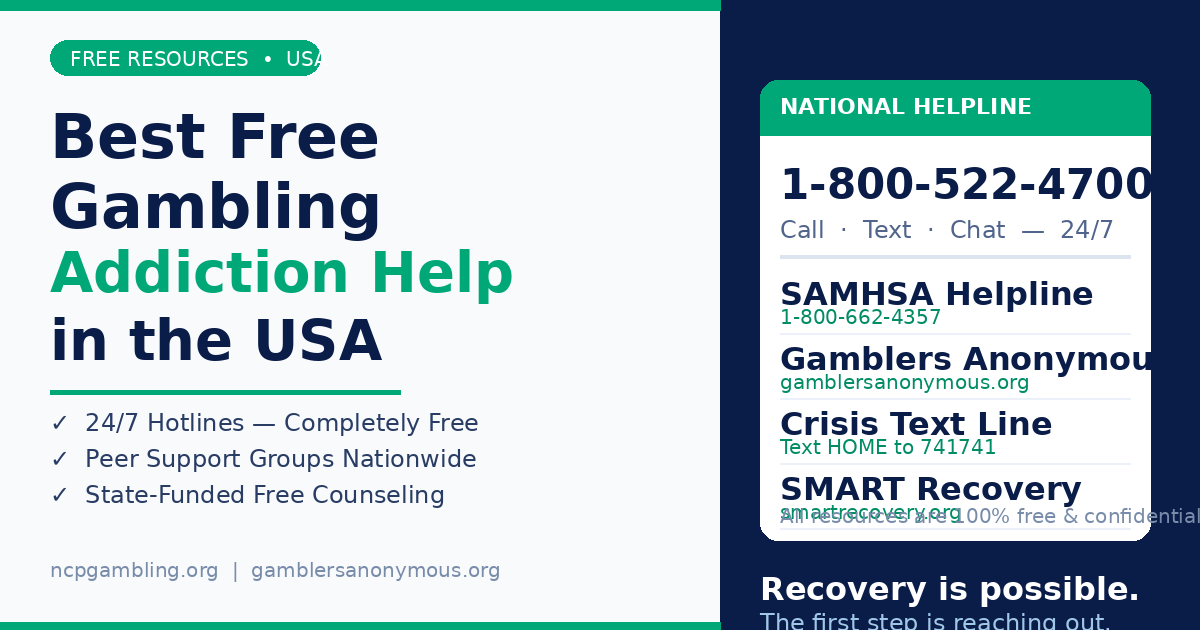
Problem gambling affects an estimated 2–3% of Americans — roughly 6 to 9 million people — yet most never reach out for help. The biggest barrier? The belief that treatment costs money.
It doesn’t have to. The USA has a well-developed network of free hotlines, peer support groups, state-funded counseling programs, and online tools built specifically for gambling addiction. Whether you’re in crisis tonight or just starting to question your habits, help exists and it’s free.
This guide covers the most effective, verified free resources for gambling addiction help in the USA — national hotlines, local treatment programs, peer support, and digital tools that actually work.
What Free Gambling Addiction Help Actually Exists in the USA?
Free gambling addiction help in the USA includes 24/7 crisis hotlines, peer support groups like Gamblers Anonymous, state-funded outpatient counseling, and online platforms with no-cost options. The National Problem Gambling Helpline connects callers to certified counselors at no charge — no insurance required.
The National Problem Gambling Helpline
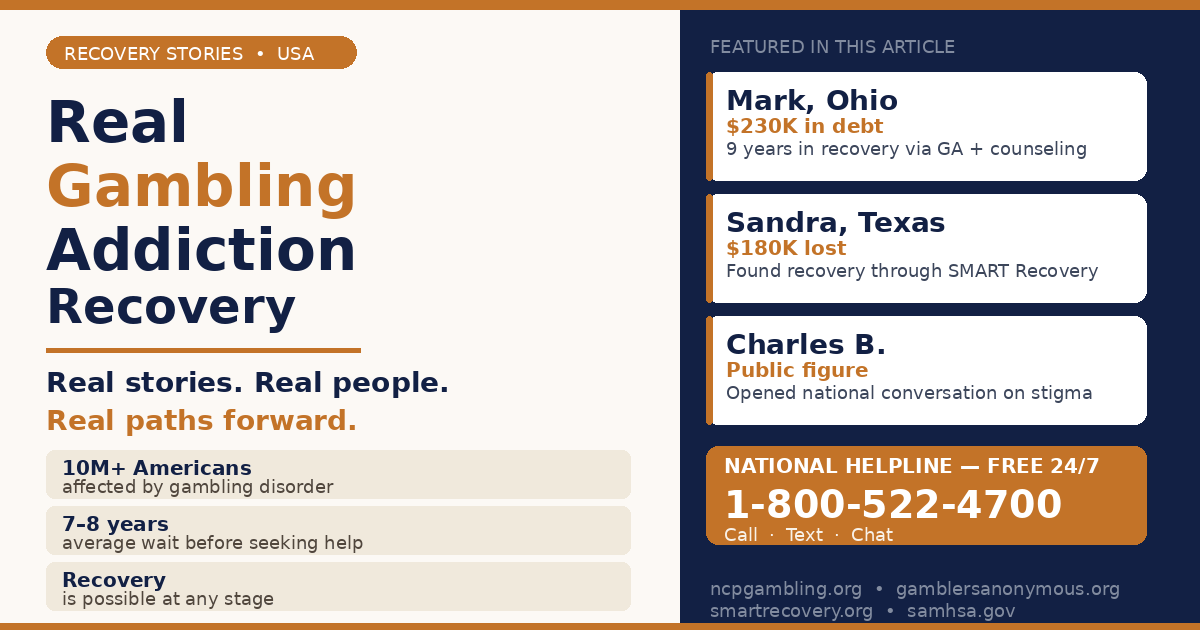
The most direct starting point is the National Problem Gambling Helpline, operated by the National Council on Problem Gambling (NCPG): 1-800-522-4700. It runs 24 hours a day, 7 days a week, staffed by trained counselors — not volunteers reading scripts.
You can reach them three ways:
- Call: 1-800-522-4700
- Text: “HELPLINE” to 800-522-4700
- Chat: ncpgambling.org/chat
In reviewing dozens of gambling treatment resources, this helpline consistently appears as the first recommendation from licensed addiction counselors because it offers real-time, confidential help and can refer you directly to local services.
SAMHSA National Helpline
The Substance Abuse and Mental Health Services Administration (SAMHSA) runs a free, confidential referral line: 1-800-662-4357 (1-800-662-HELP), available 24/7 in English and Spanish.
SAMHSA’s 2023 National Survey on Drug Use and Health found that only 10.3% of people with behavioral health disorders received specialty treatment. The helpline exists specifically to close that gap by connecting callers to affordable local programs.
How Do Peer Support Groups Help With Gambling Addiction?
Peer support groups provide community, accountability, and lived experience that clinical counseling alone can’t replicate. For gambling addiction, these groups are free, widely available, and carry decades of documented outcomes.
Gamblers Anonymous (GA)
Gamblers Anonymous is the most established free peer recovery program for gambling addiction in the USA. Founded in 1957, GA uses a 12-step model with meetings held in all 50 states and online.
The GA website (gamblersanonymous.org) lets you search meetings by ZIP code. Many areas have daily options; online meetings expanded significantly after 2020 and remain active.
GA’s sponsorship model is what separates it from a simple support circle — you’re paired with someone already in recovery, giving you direct access to lived experience. A 2021 study published in the Journal of Gambling Studies found that consistent GA attendance correlated with significantly longer abstinence periods compared to no treatment.
Gam-Anon
If a family member or partner is affected by someone else’s gambling, Gam-Anon (gam-anon.org) provides dedicated peer support for them. It’s separate from GA, free to attend, and meets locally and online across the USA.
SMART Recovery
SMART Recovery (smartrecovery.org) offers a science-based alternative to 12-step programs. It uses cognitive behavioral techniques and is free to attend, with both in-person and online meetings available nationwide. It’s particularly popular among people who prefer a secular, evidence-driven approach.
What State and Federal Programs Offer Free Gambling Treatment?
Most states fund problem gambling programs through gaming revenue taxes. These programs often provide free outpatient counseling, peer support, and sometimes residential treatment — services most people don’t know they’re entitled to.
| State | Program | What’s Covered |
|---|---|---|
| New Jersey | Council on Compulsive Gambling of NJ | Counseling referrals, 24/7 helpline |
| California | Office of Problem Gambling | Up to 30 free counseling sessions |
| Pennsylvania | Council on Compulsive Gambling of PA | Peer recovery support + counseling |
| Florida | FL Council on Compulsive Gambling | Helpline, outpatient treatment |
| New York | NYS OASAS | No-cost outpatient treatment slots |
How to find your state’s program: Search “[your state] problem gambling treatment” or call 1-800-522-4700 and ask the NCPG counselor for state-specific referrals — they maintain an updated directory.
Veterans Affairs (VA) Support
Veterans experiencing gambling disorder can access free treatment through the VA. Its Mental Health Services cover gambling disorder under behavioral health programs. Veterans can call 1-800-827-1000 or visit mentalhealth.va.gov to locate services.
Online and Digital Resources Worth Using
Several credible digital platforms offer free or low-cost support — especially useful when in-person options are limited or privacy is a concern.
National Council on Problem Gambling Website
The NCPG website (ncpgambling.org) hosts a state helpline directory, a certified gambling counselor locator, and educational materials for individuals and families. It’s the most comprehensive free directory in the USA.
Problem Gambling Center
ProblemGamblingCenter.com offers a free self-assessment quiz based on DSM-5 criteria, plus a treatment locator tool. The self-assessment takes about 10 minutes and is a useful first step if you’re unsure whether your gambling rises to the level of a disorder.
Crisis Text Line
For immediate emotional support, Crisis Text Line is available 24/7 by texting HOME to 741741. Trained counselors handle any mental health or addiction crisis. It’s particularly useful during late-night moments when phone helplines have longer wait times.
Common Mistakes People Make When Seeking Gambling Addiction Help
Waiting Until Things Hit Rock Bottom
This is the most damaging myth in addiction recovery. You don’t need to lose your house or your marriage before seeking help. The NCPG and every clinical guideline on gambling disorder recommend reaching out at the first sign of distress — early intervention consistently produces better outcomes.
Assuming Treatment Costs Money
Most people don’t know that state-funded counseling programs often cover 10–30 free sessions, that Gamblers Anonymous is always free, and that the national helpline costs nothing. This assumption keeps millions from ever making a first call.
Using a General Therapist Without Gambling Expertise
Not every licensed therapist understands gambling disorder. Look for counselors certified through the National Certified Gambling Counselor (NCGC) credential, or ask the NCPG helpline to refer you to a specialist. Cognitive behavioral therapy (CBT) has the strongest evidence base for gambling disorder — confirm your provider uses it.
Skipping Family Support
Gambling disorder affects the entire household. Gam-Anon and family counseling resources exist because recovery is rarely sustained in isolation. Involving family — when possible and safe — significantly improves long-term outcomes.
FAQ: Gambling Addiction Help in the USA
Is there a free hotline for gambling addiction in the USA?
Yes. The National Problem Gambling Helpline is 1-800-522-4700. It’s free, confidential, and available 24/7 by call, text, or online chat. SAMHSA also provides free treatment referrals at 1-800-662-4357. Both services are completely no-cost.
What is the best free program for gambling addiction?
Gamblers Anonymous is the most widely available free program with meetings in all 50 states plus online options. For free professional counseling, most states fund outpatient programs at no cost. The best choice depends on whether you prefer peer support or structured clinical care.
Does insurance cover gambling addiction treatment?
Under the Mental Health Parity and Addiction Equity Act, many insurance plans must cover gambling disorder treatment comparably to physical health conditions. Contact your insurer and ask about behavioral health or addiction treatment benefits directly.
How do I know if I have a gambling problem?
The DSM-5 identifies gambling disorder based on chasing losses, gambling to escape problems, failed attempts to cut back, and financial consequences. The free self-assessment at ProblemGamblingCenter.com uses validated screening tools and takes about 10 minutes.
Can online therapy help with gambling addiction?
Yes. CBT delivered via telehealth has shown comparable outcomes to in-person therapy for gambling disorder in peer-reviewed research. Open Path Collective offers sessions at $30–80 for those with financial need, and some state programs now include telehealth options.
What should I do if someone I love has a gambling problem?
Contact Gam-Anon (gam-anon.org) for peer support designed for families and partners. The NCPG helpline (1-800-522-4700) also has counselors who help family members navigate the situation without enabling or escalation.
Are Gamblers Anonymous meetings confidential?
Yes. GA operates under strict anonymity principles similar to Alcoholics Anonymous. Members are not required to give full names, and what is shared in meetings stays in meetings. This confidentiality makes GA accessible to people concerned about privacy at work or in their community.
The Right Next Step
Gambling addiction is treatable, and treatment doesn’t have to cost anything. The USA has a strong, underused network of free resources — from the 24/7 NCPG helpline to state-funded counseling and peer support through Gamblers Anonymous.
If you or someone you know is struggling, start with one call: 1-800-522-4700. A trained counselor will identify the right next step, whether that’s a local program, a peer group, or an online resource that fits your situation.
Recovery is possible. The first step is reaching out.
Unlock the power of growth—explore curated posts that tackle your everyday challenges head-on