Expert Signs Your Family Member Has a Gambling Problem
Gambling addiction rarely announces itself. It hides behind small lies, missing money, and mood shifts that are easy to explain away — until the damage is impossible to ignore.
If something feels off with a spouse, parent, sibling, or child, you’re probably here because you need answers, not reassurance. This guide covers the clinical warning signs used by addiction specialists, the financial red flags that surface early, and exactly how to start a conversation before a problem becomes a crisis. No jargon, no guesswork — just a clear framework built on established diagnostic criteria and real family experiences.
What Does a Gambling Problem Actually Look Like?
A gambling problem — clinically called Gambling Disorder — is a compulsive pattern where someone cannot control their urge to gamble despite serious consequences to their finances, relationships, and mental health. The American Psychiatric Association’s DSM-5 identifies it as a behavioral addiction with neurological similarities to substance use disorders.
According to the National Council on Problem Gambling (NCPG), approximately 6 million adults in the United States meet the diagnostic criteria for problem gambling. For every person affected, research consistently shows that four to eight family members experience significant psychological, financial, or emotional harm.
The core signal is not how much someone gambles — it’s what happens when they can’t stop. Problem gambling follows a recognizable pattern:
- Preoccupation — Thinking about gambling constantly, planning next sessions, reliving past wins.
- Tolerance — Needing to bet more money to feel the same excitement.
- Loss of control — Failed repeated attempts to cut back or quit.
- Chasing losses — Returning to win back money already lost, which deepens debt.
- Escape gambling — Using it to numb anxiety, depression, or stress rather than for entertainment.
- Concealment — Lying to family members about gambling frequency, amounts spent, or where money went.
- Dependency on others — Borrowing or stealing money to fund gambling.
- Jeopardizing relationships — Risking or losing a job, relationship, or educational opportunity because of gambling.
The DSM-5 diagnostic threshold is four or more of these criteria within a twelve-month period. Knowing this framework helps you see the behavior pattern clearly instead of reacting to individual incidents in isolation.
What Are the Financial Warning Signs of Problem Gambling?
Money is the most visible footprint gambling addiction leaves behind. These signs often appear months before the behavioral changes become obvious, which is why knowing what to look for financially can help you intervene earlier.
Unexplained cash shortages. Your family member routinely runs out of money before their next paycheck — even when their income hasn’t changed. Bills go unpaid, groceries get skipped, or they borrow small amounts frequently with vague explanations about where their money went.
Loan requests that escalate. Early-stage problem gambling often involves small, one-time borrowing. Over time, the requests become larger, more frequent, and harder to explain. If your family member has borrowed from multiple people in the household — or from outside it — without repaying, that pattern is a serious signal.
Missing money or valuables. Cash disappears from wallets, purses, or family accounts without explanation. In more advanced cases, valuables — jewelry, electronics, even children’s savings — are sold or pawned without disclosure.
Secret financial accounts. You discover credit cards, bank accounts, payday loans, or cash advances you were never told about. Online gambling is particularly easy to hide through digital payment apps and prepaid cards.
Extreme financial swings. Problem gamblers experience cycles of euphoria after a win and desperation after a loss. Your family member may have periods of apparent financial recovery — flush with cash and unusually generous — followed quickly by a new crisis. This is the win-lose cycle, not genuine stability.
| Financial Warning Sign | Early Stage | Advanced Stage |
|---|---|---|
| Cash shortages | Occasional, explained away | Frequent, unexplained |
| Borrowing money | Small, one-time requests | Large, repeated, multiple sources |
| Hidden accounts | One card or account | Multiple loans, cash advances |
| Missing valuables | Rare | Pawning or selling items |
| Financial swings | Minor fluctuations | Debt cycles, creditor calls |
What Are the Behavioral and Emotional Red Flags?
Beyond money, gambling disorder reshapes how a person acts, communicates, and relates to the people around them. These shifts are often the earliest signs families notice — even before the financial damage surfaces.
Secrecy and defensiveness. A family member who used to be open becomes guarded about their phone, whereabouts, and schedule. Asking simple questions — “Where were you last night?” or “Why are you stressed?” — triggers defensive, disproportionate reactions. Lying becomes habitual, even about small things.
Mood tied to gambling outcomes. Look for a pattern where your family member’s emotional state seems to swing unpredictably — but on closer inspection, the highs come after sports events or casino nights, and the lows follow shortly after. Irritability, withdrawal, and depression after a loss are common. This emotional dependency is a key diagnostic marker.
Neglecting responsibilities. Work performance declines. Family commitments get missed. A parent stops attending their child’s events. A spouse becomes disengaged and distracted. Problem gambling consumes enormous mental bandwidth, leaving little for day-to-day responsibilities.
Time disappears without explanation. Extended absences without clear explanations — late nights, long “drives,” weekends away — often indicate time spent gambling. Online gambling makes this harder to track but no less real: unusual hours on a device, staying up late, or isolating in a room with a phone or laptop.
Withdrawal from social life. Many problem gamblers gradually drop friends, hobbies, and family activities that don’t revolve around gambling. If your family member has become increasingly isolated, disinterested in things they used to enjoy, and socially distant, that social contraction is worth paying attention to.
Escalating stress, anxiety, or depression. The NCPG reports that problem gamblers have significantly higher rates of depression, anxiety disorders, and suicidal ideation than the general population. If your family member talks about feeling trapped, hopeless, or worthless — especially in combination with other signs on this list — take it seriously and act quickly.
How Do You Talk to a Family Member About Their Gambling?
Starting the conversation is the hardest part. Most families wait too long because they fear conflict or denial — and those fears are reasonable. But the longer the conversation is delayed, the deeper the crisis gets.
Here is how addiction counselors recommend approaching it:
1. Choose the right moment. Approach the conversation when your family member is calm, sober, and not in the middle of a financial or emotional crisis. Right after a loss or a confrontation is the worst time. A quiet, private setting works better than a charged group environment.
2. Lead with concern, not accusation. The goal is to open a door, not win an argument. Say: “I’ve noticed things seem really hard lately and I’m worried about you” rather than “I know you’ve been gambling and you need to stop.” Accusatory framing triggers defensiveness. Genuine concern invites response.
3. Use specific observations, not generalizations. Mention concrete things you’ve seen: missed payments, changes in mood, unexplained absences. Avoid words like “always” or “never.” Stick to facts you’ve witnessed firsthand.
4. Be ready for denial. Denial is not a character flaw — it’s a clinical feature of addiction. Most people do not admit a problem the first time it’s raised. Your goal in the first conversation is to plant a seed, not force an immediate confession.
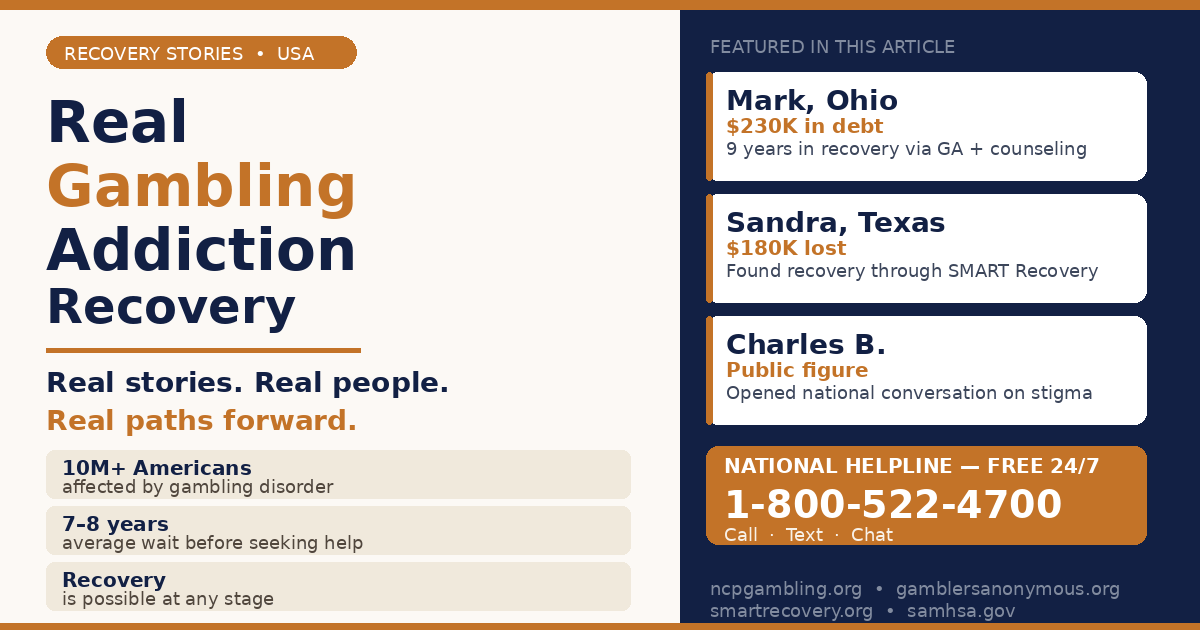
5. Have resources ready. Research support options before the conversation. The National Problem Gambling Helpline (1-800-522-4700) operates 24/7 and offers referrals to treatment providers. Gamblers Anonymous and Gam-Anon (for family members) provide peer support across hundreds of locations worldwide.
6. Set clear boundaries — and keep them. Protecting yourself is not the same as abandonment. Refusing to lend money, covering for lies, or absorbing debt are enabling behaviors that extend the problem. Boundaries protect both of you.
Common Myths About Gambling Problems That Families Believe
Misunderstanding gambling disorder delays intervention. These are the most damaging myths — and what the evidence actually shows.
Myth 1: “They just need more willpower.” Gambling disorder is classified as a behavioral addiction with measurable changes in brain chemistry, particularly in the dopamine reward system. Willpower alone does not undo neurological conditioning. This is why professional treatment — cognitive behavioral therapy (CBT), motivational interviewing, and sometimes medication — produces far better outcomes than willpower alone.
Myth 2: “They only have a problem if they’re losing a lot of money.” Some problem gamblers maintain relatively moderate financial losses for years. The diagnostic criteria focus on loss of control and life impact, not dollar amounts. A person gambling with money they cannot afford to lose — even small amounts — may meet the clinical threshold.
Myth 3: “It’s not as serious as drug or alcohol addiction.” The DSM-5 moved gambling disorder into the Substance-Related and Addictive Disorders category in 2013 precisely because research showed comparable neurological and behavioral profiles. Gambling disorder has similar rates of co-occurring depression, anxiety, and suicidality as substance use disorders.
Myth 4: “If they loved us, they’d just stop.” Addiction fundamentally impairs the brain’s ability to make decisions in line with personal values and relationships. The compulsion to gamble does not reflect the depth of someone’s love for their family. This myth creates shame and delays treatment — both for the person gambling and for the family members who blame themselves.
Myth 5: “Helping means giving them money to stabilize.” Providing money to a person with an active gambling problem — even with good intentions — typically funds continued gambling. Financial support that bypasses accountability, whether paying a bill directly or handing over cash, removes a natural consequence that might otherwise motivate change.
Frequently Asked Questions
What is the first sign of a gambling problem I should look for? The earliest observable sign is usually secrecy about money or time. If a family member becomes evasive about finances, defensive about their whereabouts, or makes unexplained requests for cash, these behavioral shifts often precede more visible consequences. Preoccupation with gambling — constantly referencing odds, scores, or upcoming events — is another early marker.
Can someone have a gambling problem if they don’t gamble every day? Yes. Frequency is not the diagnostic standard. A person who binges on gambling episodically — spending an entire weekend losing thousands — may meet the clinical criteria even if they don’t gamble mid-week. The key factors are loss of control, chasing losses, and continued gambling despite negative consequences.
How do I know if my family member is lying about their gambling? Common deception patterns include inconsistent stories about time or money, vague or evasive answers when asked directly, finding receipts or transaction records that don’t match what they told you, and discovering accounts or debts they denied having. Trust patterns that were previously reliable often shift noticeably when concealment becomes habitual.
What should I not say when confronting a family member about gambling? Avoid ultimatums made in the heat of the moment that you can’t follow through on. Avoid shaming language (“You’re destroying this family”) that triggers defensiveness rather than openness. Don’t make the conversation about your anger — center it on your concern for their wellbeing. And don’t conduct the conversation when either of you is emotionally dysregulated.
Is online gambling harder to detect than casino gambling? Significantly harder, in most cases. Online gambling leaves digital traces — bank statements, app usage, transaction histories — but requires deliberate review to find. Signs include unusual late-night device use, unfamiliar apps or websites in browser history, frequent small transactions to payment platforms, and changes in mood that correlate with sports seasons or major betting events.
Can a family member with a gambling problem get better without professional help? Some individuals reduce or stop gambling independently, particularly those with less severe presentations. However, research from the National Council on Problem Gambling indicates that professional treatment — especially CBT and peer support programs — substantially improves long-term outcomes. Co-occurring mental health conditions like depression and anxiety, which are common among problem gamblers, also typically require professional support.
How does problem gambling affect children in the family? Children in families affected by gambling disorder experience elevated rates of anxiety, depression, academic difficulties, and behavioral problems. Research published in the Journal of Gambling Studies found that children of problem gamblers are at higher risk of developing gambling problems themselves in adulthood. If children are in the home, protecting their stability and emotional safety is a critical parallel priority.
Where can a family member get help for someone with a gambling problem? Start with the National Problem Gambling Helpline at 1-800-522-4700 (available 24/7 via call, text, or chat). Gamblers Anonymous (GA) runs peer support meetings globally. For family members, Gam-Anon offers support specifically for those affected by someone else’s gambling. Many therapists specialize in behavioral addiction and can provide individualized treatment plans.
What to Do Next
Problem gambling doesn’t resolve on its own. The behavioral and financial damage compounds over time, and families who wait for their loved one to “hit rock bottom” often watch that floor fall further than they expected.
If two or more signs in this guide apply to someone you love, the most important next step is a direct, caring conversation — backed by real resources, not ultimatums.
Call the National Problem Gambling Helpline: 1-800–522–4700. It’s free, confidential, and available around the clock. You don’t need to have certainty to call. If you’re worried enough to search for this article, you’re worried enough to reach out.
Protecting your family member starts with not protecting the problem.
Get ready to discover something new—our featured articles are packed with valuable lessons