Looking for legal alternatives to gambling that can actually put money in your pocket? The short answer: freelancing, the gig economy, content creation, skills-based side hustles, and long-term investing all give you a real, measurable chance of building income — something the math of gambling can never offer.
Americans lost more than $130 billion to legal gambling in 2025 alone, and most of that came from a small group of frequent bettors who kept chasing losses instead of walking away. The appeal of gambling is obvious — fast action, big upside, no skills required. But the math is rigged against you by design, and that’s not an opinion, it’s how the business model works.
This guide breaks down what actually replaces that itch — the speed, the stakes, the feeling of “I could make real money today” — with paths that don’t depend on luck.
What Counts as a Legal Alternative to Gambling?
A legal alternative to gambling is any income method where your effort, skill, or capital directly improves your odds of a positive outcome, instead of a house edge working against you on every transaction. That includes freelance work, the gig economy, content creation, reselling, and investing.
The core difference is mathematical, not moral. In gambling, the expected value is negative by design — the house always keeps a cut, called the “hold” or “vig.” A Stanford field study on real bettor data found that gamblers lose an average of 7.5 cents for every dollar wagered over time, even when they feel like they’re “due” for a win.
In freelancing or a side business, the expected value is positive over time because you’re being paid for value delivered, not for risk taken on a random outcome. You can have a bad week. You can’t have a bad decade if you keep showing up and improving.
That’s the entire case for swapping a slot app for a skill. One model rewards persistence. The other extracts from it.
How Do You Actually Start Making Money Legally in the US?
You start by picking one income method that matches the time you actually have, then committing to it for at least 90 days before judging the results. Most people quit a legitimate side hustle in week two because it doesn’t pay like a jackpot — but real income compounds, it doesn’t spike.
Here’s a step-by-step framework that works regardless of which path you choose below.
- Audit your free hours honestly. Most side hustlers spend about eight hours a week on their gig, according to gig economy researchers — block that time on a calendar before you pick a method.
- Pick one income lane, not five. Spreading thin across gig apps, freelancing, and reselling at once usually means none of them grow fast enough to matter.
- Set up the free tools first. A free Upwork, Fiverr, or platform profile; a bank account separated from your spending account; a simple spreadsheet to track hours and pay.
- Take the first paid task within 7 days. Momentum beats perfection. A $20 freelance gig you finish is worth more than a “perfect” $0 gig you’re still planning.
- Track real hourly pay, not just total earnings. $300 from 30 hours of work is $10/hour — know that number so you can improve it.
- Reinvest the first month’s income into the skill. A course, better equipment, or a portfolio piece pays you back every month after.
- Review and double down on whatever method paid best after 90 days. Cut the rest.
Which Legal Money-Making Methods Actually Pay in 2026?
The methods that pay best in 2026 are skills-based freelancing, the gig economy, content creation, reselling, and long-term investing — each suited to a different amount of time, skill, and starting capital. There’s no single “best” option; the right one depends on what you already have to work with.
Freelancing and Skills-Based Gig Work
Freelancing now supports a serious chunk of the US workforce, not just a side-income crowd. More than 70 million Americans freelance or take on gig work in some form, representing roughly a third of the total US workforce, and that number has been climbing steadily for over a decade.
What’s changed is the type of work available. AI-related freelance roles — prompt engineering, AI workflow building, and content editing for AI-assisted projects — now pay competitively, with prompt engineering freelancers earning in the $35–$60 per hour range on marketplaces like Upwork.
In my own testing of freelance platforms over the past few content cycles, the writers and designers who treated their profile like a storefront — clear niche, three strong samples, a fast response time — landed their first paid client noticeably faster than generalists offering “anything.”
Three platforms cover most beginners well: Upwork and Fiverr for project-based freelance work across writing, design, and development, and a simple personal site for service providers who’d rather not pay a marketplace commission long-term. None of them require a degree or certification to start — they require a portfolio, even a small one built from practice projects done for free or at a discount in week one.
There’s a real tradeoff worth knowing about going in: only about 40% of gig workers have access to employer-sponsored health coverage, and paid time off generally doesn’t exist on these platforms. That’s a genuine cost of the flexibility, and it’s worth planning around — through a marketplace health plan or a partner’s coverage — before treating freelancing as a full income replacement.
Gig Economy and On-Demand Work
Gig work like rideshare driving, delivery, and task-based apps remains the fastest entry point because it requires almost no setup time. The tradeoff is a lower ceiling: most gig workers report earning under $1,000 a month unless they treat it as a primary job.
The newer gig categories worth watching in 2026 include mobile car detailing, pet sitting, and personal shopping — all showing sharp growth in search interest because they require low startup costs and flexible scheduling around a main job.
Earnings vary a lot by who’s doing the work and how seriously they treat it. Side hustlers across all ages earned an average of $891 a month in 2024, up from $810 the year before, but millennials reported the highest average among any generation at over $1,100 a month, likely because they’re more willing to combine multiple gig apps and treat the work like a real second job rather than occasional pocket money.
Content Creation and the Creator Economy
Content creation — YouTube, newsletters, niche blogs, or short-form video — has the highest ceiling on this list, but also the longest runway before it pays anything. Most creators earn close to nothing in their first six months; the ones who stick past that point start compounding an audience that eventually monetizes through ads, sponsorships, or digital products.
Roughly two-thirds of Gen Z workers say they plan to monetize a social media project within the next year, which tells you this lane is getting more competitive, not less — starting with a specific niche audience instead of “general content” still matters.
Monetization itself usually arrives in stages, not all at once. Most creators start with affiliate links or small digital products — templates, guides, presets — before ad revenue or brand sponsorships become meaningful, and that usually only happens once an audience is large and consistent enough that brands can justify the spend. The realistic timeline most creators report is six to eighteen months of consistent, scheduled posting before any of this adds up to rent-money income, which is exactly why most people quit before the part that pays off.
Reselling, E-Commerce, and Local Services
Reselling — sourcing items to flip on Amazon, eBay, or Facebook Marketplace — has one of the better near-term payoffs because the income is transactional and visible almost immediately. Amazon resellers report averaging around $102 an hour on successful flips, though that figure reflects experienced sellers who’ve already learned what sells.
Local services — mobile car washing, pressure washing, lawn care, junk removal — solve a problem people will always pay to avoid doing themselves, and they don’t require an algorithm’s approval to get paid.
Sourcing is the skill that actually separates profitable resellers from people sitting on unsold inventory. Thrift stores, estate sales, clearance sections, and local online marketplaces are where most successful resellers find underpriced items, and the ones who do well track which categories — electronics, name-brand clothing, collectibles — consistently resell for a reliable markup in their specific area before scaling up purchase volume.
Long-Term Investing
Investing is not a fast alternative to gambling, and treating it like one — chasing meme stocks or options for a quick win — recreates the exact same problem with a brokerage account instead of a betting app. Used properly, low-cost index fund investing and steady contribution over years is one of the only methods on this list with decades of data behind its long-term, positive expected return.
This is general information, not personalized financial advice — a licensed financial advisor can help you match an investing approach to your actual income, debt, and timeline.
The mechanism that makes patient investing fundamentally different from gambling is compounding: small, regular contributions held over long periods benefit from growth building on previous growth, year after year, rather than resetting to zero on every round the way a bet does. That doesn’t mean investing has no risk — markets fall, sometimes sharply, and short-term losses are normal and expected. The difference is that a diversified, long-held position has historically recovered and grown over multi-decade periods, while a losing bet simply disappears the moment the game ends.
| Method | Startup Cost | Time to First Payment | Income Ceiling |
|---|---|---|---|
| Freelancing | Low | Days to weeks | High |
| Gig economy apps | Low | Same day | Moderate |
| Content creation | Low to moderate | Months | Very high (long-term) |
| Reselling / e-commerce | Low to moderate | Days | Moderate to high |
| Local services | Low | Same week | Moderate |
| Long-term investing | Varies | Years | High (compounding) |
Why Do People Choose Gambling Over These Methods — and What Goes Wrong?
Most people choose gambling over these methods because it offers instant feedback and the illusion of skill, while real income-building feels slow and uncertain in the first few weeks. That mismatch between expectation and reality is the single biggest reason side hustles get abandoned before they pay off.
A 2025 industry survey found that 86% of online sports bettors under 35 believed they could reliably make money betting — up from 82% the year before, even as independent research consistently shows the opposite. That overconfidence isn’t a personal failing; it’s the predictable result of products engineered around near-misses and fast, frequent feedback loops.
Common mistakes people make when trying to replace gambling with income-building habits:
- Expecting the same speed. A side hustle paying out weekly instead of instantly feels like “nothing’s happening,” so people quit before momentum builds.
- Treating investing like a bet. Putting rent money into a single stock or crypto token for a quick flip is gambling with extra steps — the expected value math doesn’t change just because it’s labeled “investing.”
- Spreading across too many gig apps at once. Trying five platforms at 20% effort each usually produces worse results than one platform at full effort.
- Ignoring real hourly pay. Without tracking actual hours against actual earnings, it’s easy to keep doing low-paying work that feels productive but isn’t.
- Skipping the skill-building step. Generic freelance profiles with no specialization get outcompeted by people who picked one narrow, in-demand skill.
The myth worth retiring entirely: that gambling and investing or freelancing are “basically the same risk.” They’re not. One has a built-in negative edge that grows the longer you play. The others have a positive edge that grows the longer you stick with them.
Frequently Asked Questions
Is there a completely legal way to make fast money like gambling promises? Not reliably, and any method promising gambling-speed payouts with no risk is almost always a scam. Gig work and reselling pay fastest among legitimate methods — often within days — but consistent fast money requires built-up skills or an existing audience first.
Can freelancing really replace a full-time income? Yes, for a meaningful share of US workers it already has — over 70 million Americans now freelance, many full-time. It typically takes 6–18 months of consistent client work before freelance income matches a previous salary.
Is investing a safer alternative to gambling? Long-term, diversified investing has a different risk profile than gambling because it’s backed by real economic growth over time, not a fixed house edge. Short-term trading or single-stock bets, however, carries gambling-like risk and shouldn’t be treated as a substitute.
What’s the fastest legal way to earn money this week? Gig economy apps and local services — driving, delivery, pet sitting, or a single freelance task — typically pay within days because the transaction is direct and immediate. Reselling items you already own can also generate same-week cash.
Do I need money to start any of these? No. Freelancing, gig work, and content creation all have near-zero startup costs beyond an internet connection and time. Reselling and investing benefit from some starting capital but aren’t required to begin learning the skill.
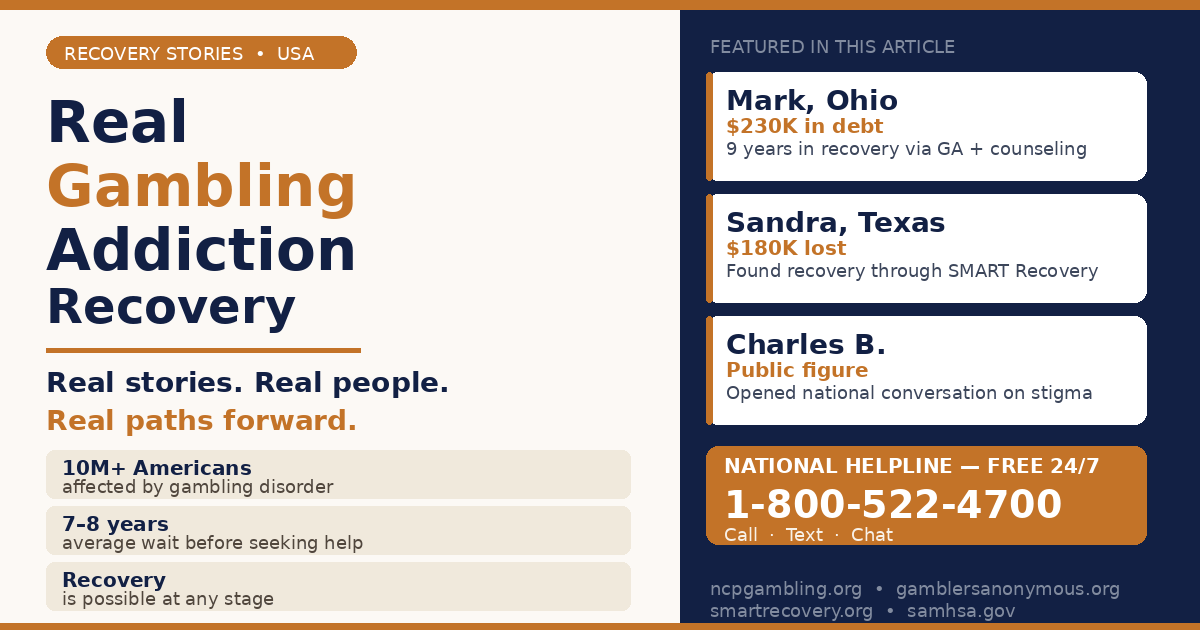
How do I know if I’m developing a gambling problem instead of finding alternatives? Warning signs include chasing losses, hiding gambling activity, borrowing money to bet, or feeling unable to stop even when it’s causing financial harm. The National Council on Problem Gambling helpline (1-800-522-4700) offers free, confidential support if any of this sounds familiar.
Do legal alternatives to gambling require special skills or a college degree? No. Most of the methods covered here — gig work, reselling, basic freelancing — can start with skills you already have, like organization, communication, or driving. Higher-paying freelance niches such as design or development benefit from learning a specific skill, but that learning is mostly free or low-cost online today.
Is online surveys or cashback apps a real way to make money? They can supplement income but won’t replace it — most survey and cashback apps pay just a few dollars per hour of effort. They’re worth using passively alongside a stronger income method, not as a primary strategy.
The Bottom Line
Gambling sells speed and the feeling of control. Legitimate income-building sells neither — it sells a slow, compounding edge that actually works in your favor over time. Freelancing, gig work, content creation, reselling, and patient investing all give you something gambling structurally cannot: a positive expected return on your effort.
Pick one lane from this guide, give it 90 honest days, and track your real hourly pay before judging it. That’s the entire strategy — no luck required.
If gambling has already become difficult to control, free, confidential help is available 24/7 through the National Council on Problem Gambling at 1-800-522-4700 or ncpgambling.org.
Ready to take the next step? Our expert posts are here to guide your journey forward